Homes do not fall short simultaneously. They murmur initially, a hairline fracture below, a sticky door there, a faint stuffy smell when the weather condition transforms wet. After twenty years walking crawl rooms, mapping piece splits, and viewing laser levels level regarding drooping floors, I have actually discovered that the framework constantly provides fair warning. The technique is recognizing which signs issue, and when a quick spot stops being a repair and begins coming to be pricey procrastination.
If you are keying foundation repair service near me since something feels off, listen. The 5 indications listed below are reliable, area evaluated, and workable. I will certainly also share just how to divide typical settling from authentic difficulty, what solutions a credible company might suggest, and exactly how basement waterproofing or crawl area encapsulation fits into the picture.
Cracks that chat back
Hairline fractures are not a situation by themselves. Concrete diminishes as it remedies, and stonework changes with temperature level. A pencil thin vertical crack that has actually stagnated in years can be seen and laid off. The cracks that get my attention have several of these qualities: they widen gradually, they run in a pattern that mirrors tension, and they bring water with them.
Stair step fractures along mortar joints in brick or block typically note differential negotiation, one component of the foundation going down about another. Horizontal fractures in a basement wall, especially mid height, indicate lateral dirt pressure and bowing. Diagonal fractures that begin at window edges and widen toward the top or lower suggest racking forces. If a structure split is broad enough to slide a quarter into, approximately 1/8 inch, or if it has grown measurably in a couple of months, request for a foundation inspection.
Track motion, not just appearance. I favor split screens or easy inform stories made from a dab of 2 part epoxy marked with a pencil line. Recheck monthly. If the mark shifts or breaks, you have energetic movement. I have actually seen a split double from 1/16 inch to 1/8 inch across a solitary damp spring when seamless gutters failed and downspouts discarded water at the footings. Quick adjustment underscores urgent risk.
Water turns cracks right into freeways. Efflorescence, that white powder bloom on cellar walls, suggests dampness is wicking through masonry. Rusty nail heads on a completed wall, blistered paint, or a darkened hairline in block tells the very same story. In these cases, structure repairs and basement waterproofing are commonly partners, not rivals. Sealing just the surface without attending to activity or hydrostatic pressure resembles putting a plaster on a leaky pipe.
Doors and home windows that reject to behave
Every timber door swells a little throughout damp spells. That seasonal swell should be gentle and foreseeable. The warning is perseverance and pattern. When the very same bedroom door sticks monthly, when you plane it and it goes back to rubbing the jamb in a period, the door is not the problem. The frame is moving.
Foundations telegram movement into the framework as racking. You see that as angled spaces at window edges, daylight along a lock side, or an out of square reveal. I bring a straightforward torpedo degree and a 6 foot level for this reason. Floors that tilt, also by a fifty percent inch throughout a room, twist door frames sufficient to capture equipment. House owners frequently tell me they changed a door slab, just to locate the lock still misaligns by 3/16 inch. The hinge screws were biting into a shifting jamb, not a steady stud.
Look at drywall, too. A diagonal split from a window corner or the leading edge of a door that grows under regular living problems points to mount distortion. If the exact same corner opens up once more after annual caulking and paint, the cycle of activity is still live. Home window sashes that bind on just one side, or double hung windows that drift down after being increased, are subtle tips that the opening has shifted from rectangular to rhomboid.
Floors that incline, bounce, or telegraph tile cracks
Human balance is sensitive. Many people notice a slope of concerning 1 inch over 20 feet when they set a marble down and enjoy it stray. If a hallway tosses a round towards one wall surface every time, or if your eating chairs roll unwanted, inspect the subfloor with a laser or a clear water level tube. I map high and low spots with painters tape prior to opening up a crawl room hatch. 9 breaks of ten, those dips match a beam that has shed support, a girder that has scratched as well deeply over a pier, or a decomposed sill plate.
Tile tells the truth in a different way. Lengthy diagonal fractures that neglect cement lines and cross a number of ceramic tiles reflect substrate motion, usually from a deflecting flooring system. Wood joists rated L over 360 for deflection still move sufficient to print through weak surfaces if the foundation sneaks. I as soon as traced a duplicating ceramic tile crack pattern straight to a sinking interior pier, down 3/8 inch over two years due to the fact that a sluggish pipes leakage softened clay under it. Repair the pier with helical heaps or a rebuilt footing, the splits stop growing. Ignore the reason, and brand-new ceramic tile will divide the very same way.
In a slab on quality home, try to find crinkling baseboards, spaces beneath cabinets, and a mismatch at transitions where slab sectors relocate independently. Piece fractures that rise on one side, a trip lip of even 1/16 inch, can note dirt heave or shrink-swell clay biking with wetness. An appropriate structure fixing strategy focuses on halting movement first, after that releveling surfaces as needed.
Moisture where it does not belong
Water seldom turns up pleasantly. It slips through capillarity with hairline stonework pores, condenses on cool surfaces, and trips damp air into dark tooth cavities. A mildewy smell in a basement or crawl area is not simply a convenience issue, it is an architectural hazard. Timber over 16 percent dampness content welcomes fungi, and mold and mildew growth produces off gassing that penetrates living areas. Damp dirt close to a footing, week after week, welcomes settlement.
In basements, expect persistent damp areas at the cove joint, the joint where wall fulfills slab. A sump pump that cycles more often after tiny storms signals climbing groundwater. If you see water rings on cardboard boxes kept near a wall, or corrosion lines on built in metal shelving feet, the wall is weeping. Yes, indoor water drainage and vapor obstacles form component of cellar waterproofing, but they are not a full response if exterior grading presses thousands of gallons of roof covering runoff against the foundation.
Crawl spaces amplify little mistakes. An open planet floor invites moisture, pests, and radon. In warm months, humid outside air going into a cool crawl space condenses on air ducts and joists. Over time, joists cup, subfloors ripple, and the very first finished floor over develops soft places. Creep area encapsulation transforms the setting totally. When you encapsulate crawl space locations with a continuous 12 to 20 mil vapor barrier, seal seams and piers, include stiff insulation on the walls, and condition the air with a dehumidifier or supply air tap, wood dries to risk-free degrees. I have actually gauged a decrease from 19 percent to 12 percent timber wetness in twelve weeks after an appropriate encapsulation.
If you see standing water after storms, fungi flowers on joists, or rust on a/c boots in the crawl, take it seriously. Incorporate encapsulation with foundation repair work when supports have already moved. I have seen home owners tackle vapor barriers first, just to uncover a girder still drooping since a block pier tilted on softened soil. Stabilize, then encapsulate, and your financial investment lasts.
Separation and spaces that do not close
Walk the exterior. Where the chimney satisfies exterior siding, is there a wedge shaped void large sufficient to glide a finger into on top, limited near the bottom? That is a classic indication of the chimney footing resolving at a various price. Chimneys are heavy, deeply packed, and typically rest on independent grounds that were never ever linked to the main foundation. Laid off, the void widens, blocks break in a stairway action, and flue liners change. I have mounted helical piers to recuperate 1 inch of settlement on a masonry chimney, after that stitched mortar and included stainless bands. It is much more affordable to capture it at a quarter inch.
Inside, take a look at where countertops satisfy the wall surface. Caulk lines that tear open again and again, or walls that lift far from drywall and leave a shadow, tell you the framework is relocating. Outside, voids in between fascia and brick, or a trim board pulling away near the garage door, send the exact same message. The edge case below is seasonal motion in lengthy periods of trim, which can be regular. But when the opening repeats in the exact same location and expands year over year, think the structure is speaking.
Sill plates and edge joists are a special concern in older homes. A carport conversion or room addition might have presented combined footing midsts or a missing sill gasket. Termites like moist sill plates, and eaten wood sheds bearing, which creates a refined line of separation under house siding. Probe with an awl. If timber falls apart, you require both an insect treatment and a structural repair strategy, not just new trim.
What pushes a foundation out of line
Soil and water do most of the damages, yet the recipe differs with region and site. Extensive clays swell when wet and shrink hard when completely dry, pumping a structure backwards and forwards across seasons. Sandier soils drain pipes well however can rinse around grounds if a downspout puts five hundred gallons in a storm at the exact same edge. Infilled great deals frequently conceal buried particles pits that press under the weight of a slab. Trees draw moisture from soils with unusual reach, typically 1 to 1.5 times their cover span, which can dehydrate a clay pocket under part of a footing and create differential settlement.
Plumbing leaks are the sluggish assassins. A pinhole under a slab can leak a gallon an hour, softening soils and producing spaces. I request for a fixed test on old cast iron lines when slab movement is local to a bathroom or kitchen wing. Watering overspray versus a foundation, particularly on vinyl exterior siding where water sneaks behind, maintains dirts wet also in completely dry periods. A stopping working seamless gutter seam over an edge can dump hundreds of gallons onto the exact same three feet of dirt throughout a summer rainstorm. Foundation fixings near me looks grab in late springtime for a reason.
A fast self check prior to you call
Use this brief, once around your house checklist to mount the conversation with a pro.
- Measure the largest fracture you can locate, keep in mind development with a dated picture, and mark it inconspicuously with a pencil. Prioritize anything at or beyond 1/8 inch or that leaks during rain. Close each indoor door gently and note which ones massage the latch or hinge side. If greater than one in the same location is mischievous, suspicious racking. Place a rounded marble on a tough flooring in three spaces. If it rolls continually towards the very same wall surface, illustration the slope instructions on a flooring plan. In the cellar or crawl, seek efflorescence, standing water, wood moisture over 16 percent if you have a meter, or corrosion at metal supports. Outside, sight along the structure, expect bulges or bows, and examine spaces at the smokeshaft, trim, and garage door corners.
How a trusted specialist will certainly think, and what they could propose
An excellent foundation repair service contractor starts by listening and determining, not offering. Anticipate altitudes taken with a laser or water level to map flooring variation. Photos of cracks and corners should become part of the file. Wetness analyses, a pipes examination if warranted, and a walk around the site to examine drain will complete the diagnosis. If the browse through ends with a single sentence prescription without information, maintain purchasing structure repair services near me till you find a person who documents what they see.
For negotiation, underpinning with steel press piers or helical piers is common. Press piers make use of the building's weight to drive steel sections to pack birthing strata, after that lift and support. Helical piers twist right into the dirt with helical plates, like a large screw, and check out torque that relates to capacity. Both can be mounted all year, typically with very little excavation at each pier area. I have lifted cleared up corners by 3/4 inch the exact same day piers went in, then watched fractures close to hairlines.
For bowing basement wall surfaces, carbon fiber bands or steel I light beams resist additional motion, while outside grading and drain job alleviate stress. Carbon fiber excels when cracks are little and bowing much less than around 2 inches. Larger deflection may require supports, beams, or partial wall surface reconstructs. For slabs that have worked out in isolated areas, polyurethane foam injection or typical mudjacking can relevel surface areas, worth considering for garage pieces or stoops. I do not foam inject under structural footings unless crafted for it, given that piering is a lot more predictable for heavy loads.
Expect cost arrays, not taken care of guarantees without context. A single pier could face the low thousands, and an entire side of a home with 6 to 8 piers can reach well into 5 numbers, depending upon access, depth, and framework. Carbon fiber reinforcement often lands in the low to mid four numbers per wall surface, and a full cellar waterproofing system with indoor drainpipe, sump, and vapor barrier can differ commonly by dimension. Crawl area encapsulation commonly varies from a couple of thousand dollars for a tiny, straightforward area to the mid teenagers when adding drain, insulation, and dehumidification. Get a created scope with drawings, tons computations if suitable, and a transferable guarantee that define what is covered.
Why cellar waterproofing and encapsulation belong in the very same conversation
Movement and dampness feed each various other. Raise a worked out footing without taming roofing system drainage and you take the chance of a repeat. Seal up a basement with interior drains and sump, yet leave soils filled against the wall, and lateral pressure remains to push. A meaningful plan web links foundation repair with water management.
Start outside. Extend downspouts at least 6 to 10 feet with hidden, sloped lines preferably. Rebuild adverse grade to make sure that soil drops away from the foundation at least 6 inches over the first 10 feet. In clay areas, include a slim layer of topsoil for plantings, not thick compost that holds water against the wall surface. If a driveway side gathers water next to the house, cut a trench drainpipe and path it away.
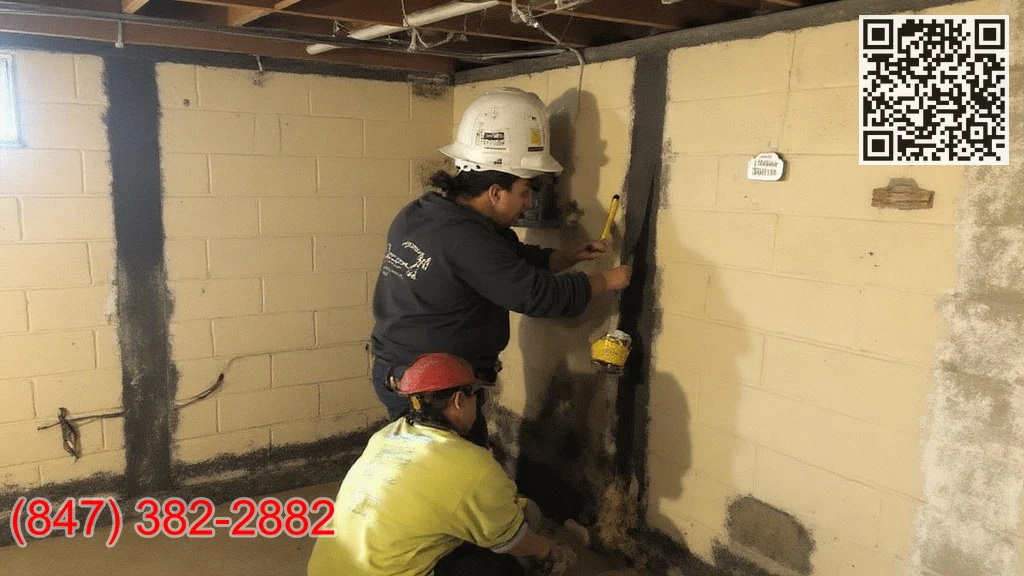
Inside, a basement that cries through the cove joint responds well to an indoor drainage network to a sump, paired with a vapor obstacle on the walls to obstruct moisture and direct it down. I favor a sealed lid sump with a top quality pump, an additional on a separate circuit, and a battery backup that can run through a multi hour outage. Keep discharge lines pitched and freeze shielded. In crawl areas, encapsulate crawlspace locations totally, not just a sheet on the flooring with loosened joints. Tape and mechanically attach joints up piers, secure the edge joist, and add moisture control. If you have to air vent a crawl per code, think about mechanical conditioning alongside.
A fast note for viewers that have run across the expression enveloped crawl.space and asked yourself if it is a gimmick. It is simply another means to describe a sealed, conditioned crawl area. The details are what matter. A 6 mil poly sheet threw on the dust is not encapsulation. A constant, thick lining, secured to wall surfaces, with drainage where required and managed air, changes the area and safeguards your structure.
Timing, permits, and the insurance question no one loves
If a crack is proactively expanding, if https://claytonwbjz587.yousher.com/thinking-of-foundation-repair-near-me-3-things-to-know-first a door instantly binds after a peaceful spell, or if you catch water pressing in where it has not before, move swiftly. Underpinning and stabilization do not get cheaper with time. The majority of territories do not call for complete authorizations for like for like drain or minor indoor work, yet many do call for permits for structural fixings, particularly external excavation, piering, or beam support. Ask your service provider to handle allowing and give evaluation records. I maintain duplicates of every little thing, including prior to and after elevation maps, in both paper and digital type for customers. It repays throughout resale.
Homeowners insurance seldom pays for foundation repair work unless a covered risk like a pipes burst or automobile impact created the damage. Slow-moving negotiation, hydrostatic pressure, and wear are usually omitted. That claimed, if a sudden pipe leakage undermined a piece, I have actually successfully helped customers apply for related cosmetic repair work while they moneyed the structural job individually. It is a conversation worth having, with realistic expectations.
Choosing the right partner when you search structure fixings near me
Credentials aid, yet referrals and website particular believing matter much more. Request for local tasks of similar age and soil, not simply a shiny pamphlet. You want a supervisor who can talk soils, lots, and water in the same breath. Take notice of how they deal with the unknowns. An honest bid consists of contingencies for concealed footings, buried energies, or inadequate fill. Reduced quotes that hand wave intricacy often come back with modification orders.
You will likewise see different ideologies. Some companies push maximum pier counts to chase after excellent degree. Others target stablizing with selective lifting. In a forty year old home, I aim for no further movement and a practical aesthetic healing, as opposed to compeling a complete lift that can produce security splitting. There is art in the judgment, and the most effective staffs describe their why.
Simple behaviors that maintain a good repair good
The ideal foundation fixing paired with wise water monitoring sets you up for years. Maintain it by doing this with a few seasonal habits.
- Clean rain gutters twice a year, validate downspouts release at least 6 feet from the foundation, and fixing joints prior to the next storm. Walk the boundary every springtime, add dirt where animals or disintegration produced low places, and preserve a mild incline away from the house. Open the crawl area or basement two times a year, check for brand-new odors, pump feature, moisture below 55 percent, and completely dry linings or walls. Watch your first repair season very closely. Take dated pictures of key cracks and sticky doors each quarter, after that loosen up if they remain stable. Maintain trees. Trim and water carefully, and speak with an arborist before eliminating a huge tree near your house, considering that soil rebound can shift loads.
Homes move a little, that is normal. However when the five signs above start singing in carolers, it is time to act. The ideal mix of structure fixing, tuned drain, and either basement waterproofing or a well thought about strategy to encapsulate crawl space areas will steady the framework and make the home healthier. If you are looking for foundations repair work near me or structure fixings near me, utilize what you have actually found out right here to ask sharper inquiries and expect clearer answers. That self-confidence, plus a professional who appreciates both structure and water, is the distinction in between chasing splits and resolving the problem.
 Ask ChatGPT
 Ask Grok
 Ask Perplexity
 Ask Claude
 Ask Google AI
 Ask You